
A Steam store page has a lot to do in very little space. A few lines of text and a handful of images have to explain what the game is, set its tone and make someone want to buy it.
At LCP Localizations we translate these pages for game studios. We also check them once they are live on Steam, and keep them in step with the English version after launch.
Whether a game needs a localized store page at all, and which languages to start with, is a question of its own. We cover it in the guide Writing a game description and why Steam page localization matters. This page is about the work itself, and about a real project: the store page of UNDERDOGS.
What gets localized
A store page is more than its description. When we take on a Steam page, the work usually covers:
- The short description, the line next to the main capsule and usually the first text a player reads on the page.
- The long description, the "About this game" section, with its headings and feature lists.
- Text inside capsule images and other graphic assets, when the studio can supply editable files.
- Trailer subtitles.
- Update and event announcements: patch notes, DLC launches and seasonal events published on the store page and the community hub.
One detail is worth knowing before starting. Valve's Steamworks documentation treats store page translation and in-game translation as two separate things, and puts it plainly: "Language support is determined by the in-game language settings, not the store page."
In other words, a translated store page does not add a language to the game's list of supported languages on its own. That list comes from the languages the studio declares for the game in Steamworks.
How we work
It starts with a brief. The studio sends us the current page text, the graphic assets that contain text, the trailer script and the list of target languages.
If the game is already localized, names and key terms come straight from its glossary, so the store page and the game call things by the same name. If it is not, we build a short glossary first.
Then comes translation, editing and proofreading, the same process we use for in-game text in our game localization service. A translator adapts the copy and a lead editor reviews it.
The difference is the kind of text. A store page is marketing copy, so register, rhythm and length get as much attention as accuracy. A description that is correct but flat does not do its job.
Once the studio publishes the translations, our team opens the live page in each language and goes through it as a player would. We look for awkward line breaks, text cut off in images and headings, strings still in English and terms that do not match the game. It is the same approach as in-game localization QA, applied to the store.
The last step comes after launch. Store pages keep changing after release, with new features, DLC, events and sales.
When only the English page gets those changes, the other languages slowly drift into describing an earlier version of the game. The team that translated the first version can pick up the changed sections, so players in every language read the same information.
Pricing
We quote Steam page localization per project. The price depends on the length of the page and on the number of languages, and studios can request a quote through the contact page.
Case study: UNDERDOGS by One Hamsa
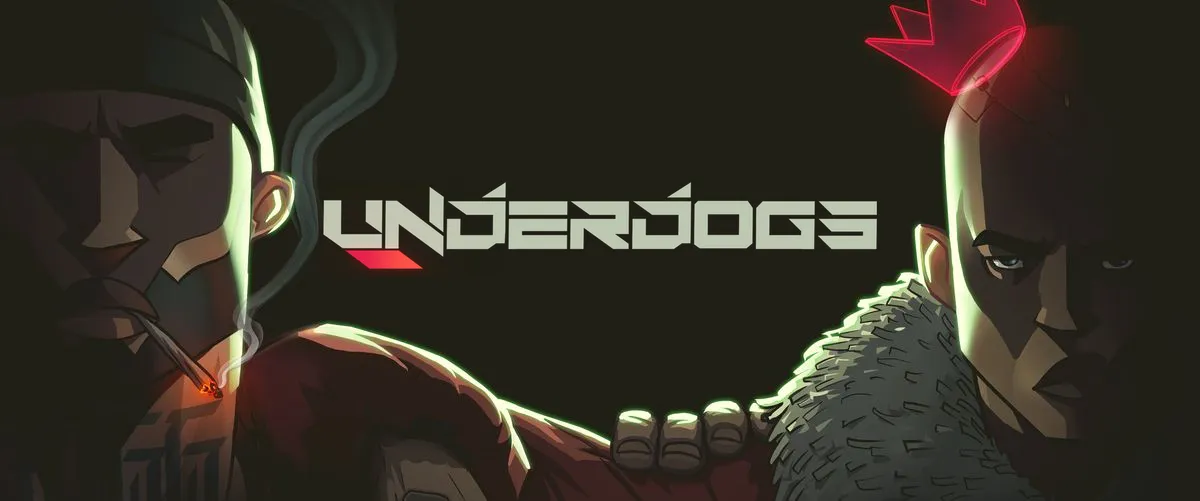
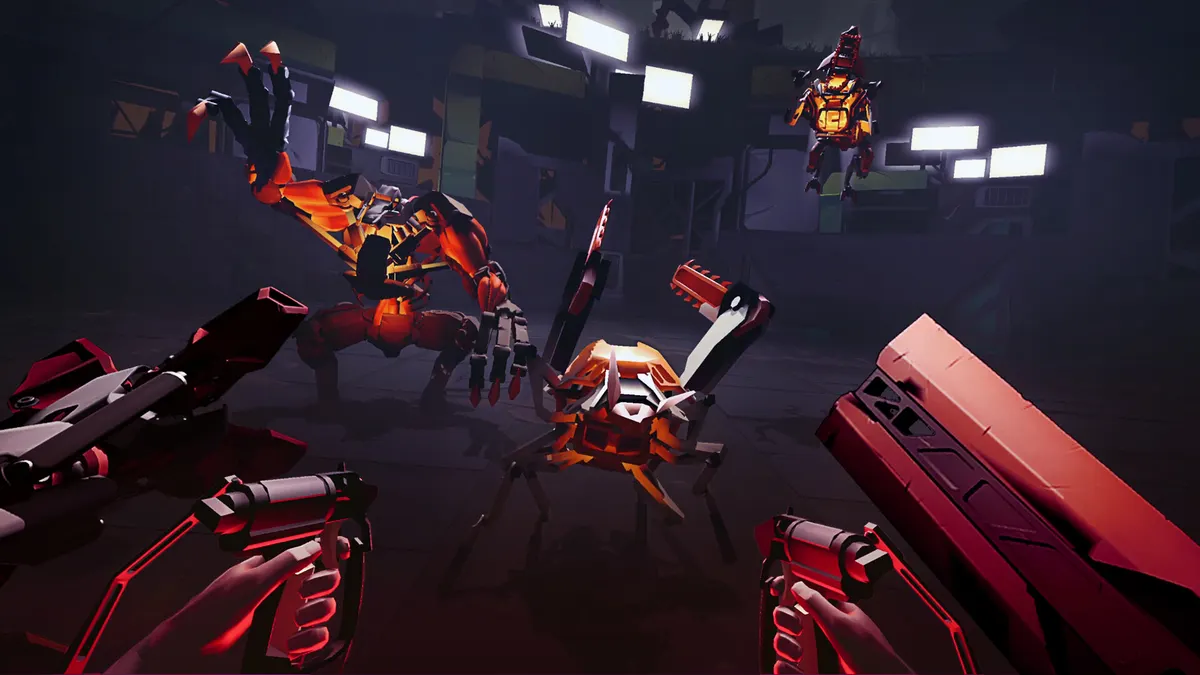
UNDERDOGS is a physics-based VR mech brawler with a roguelike structure, developed and published by One Hamsa. It came out on 25 January 2024, on Meta Quest and on Steam for PC VR on the same day (sources: Steam store page, Meta Quest blog).
The store page sets the mood from its first line, which invites players to wrap themselves "in 5 tons of metal" and go smashing through underground mech fights. We localized that page into four languages.
- Client
- One Hamsa
- Scope
- Steam store page
- Languages
- Korean, Spanish (Spain), German, French
- Year
- 2024
The challenge: slang that sells
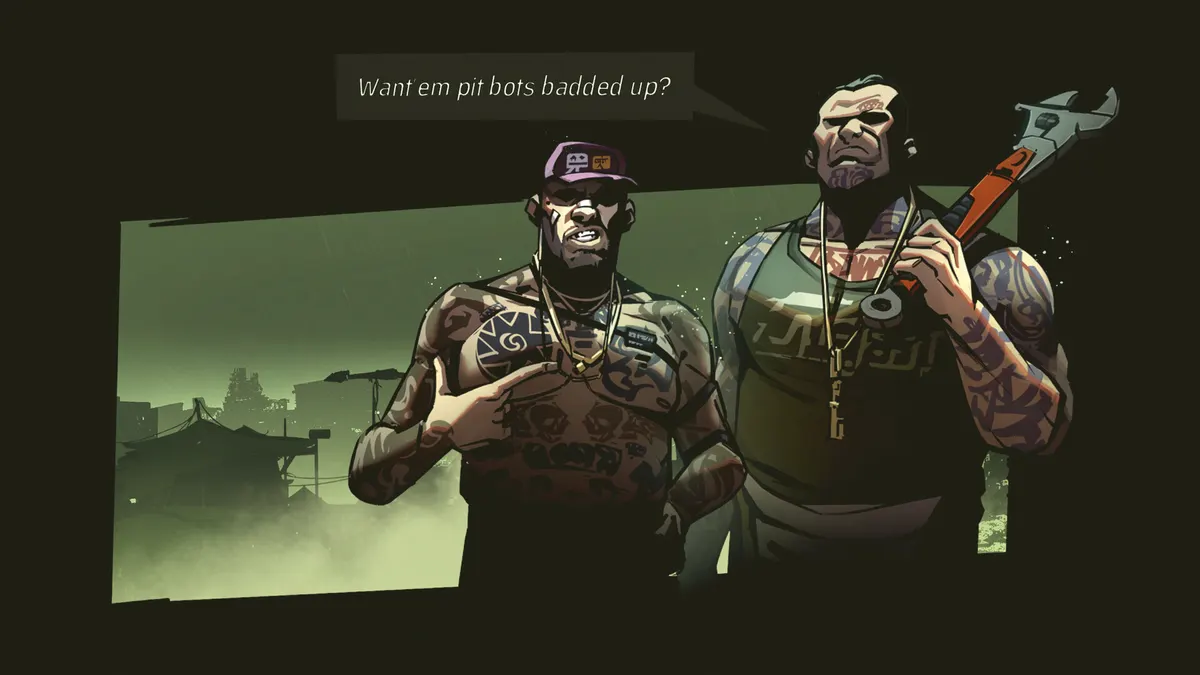
Xavier Montemurro, who managed the project, remembers an English page written in heavy street slang, often crude, in the voice of the game's underground fight scene. That voice is a big part of the game's identity, and a literal translation would have lost it.
There was a second layer to the job. Because the text sits on a store page, it also had to work as sales copy. In each language we adapted the marketing tone so that the page reads as an invitation to play and to buy, not as a translated product sheet.
Players were waiting, too. Requests for these four languages were strong, so the localized pages had an audience ready for them.
What it looks like on Steam
The examples below quote the store pages as published on Steam on 1 October 2026. Each one shows a different way of handling tone.
Take the opening of the short description. The English page on Steam starts with "UNDERGROUND MECH FIGHTS!", and the German page on Steam keeps that line in English before switching to German: "Wickle dich in 5 Tonnen Metall ein und stürze dich in eine finstere Szenerie aus voller Metall-auf-Metall-Gewalt!"
The English hook works as a genre label that German players already read in English. The sentence that follows carries the tone in their own language.
Rhythm matters just as much. The German page on Steam lists the attacks with four verbs that all start with the prefix "zer-", which expresses destruction: "Zerschlage, zerschmettere, zerfetze und zerreiße feindliche Bots und Mechs." The repetition keeps the hammering pace of the English copy.
Then there is the closing line. "Welcome to the jungle" is the game's tagline, and Meta also used it in the title of its launch announcement. The German page on Steam keeps the image as it is: "Willkommen im Dschungel."
The Korean page on Steam takes a different route. It uses the four-character idiom 약육강식, "the weak are the prey of the strong": "약육강식의 세계에 오신 것을 환영합니다." The jungle disappears, but the law of the jungle stays, through an expression Korean players know well.
Where the game stands today
UploadVR reviewed UNDERDOGS at launch with a score of 4 out of 5 (23 January 2024). On Steam, the game has an "Overwhelmingly Positive" user review rating, with 97% of 2,132 reviews positive (store page, checked on 1 October 2026).
Here is how One Hamsa's head of studio summed up working with us:
"LCP Localizations delivered great localization, adapted to our workflows, and also helped us catch issues through their thorough LQA."
Assaf Ronen, Head of Studio, One Hamsa
We follow the same steps for every store page: understand the tone first, translate the page so it sells in each language, check it live on Steam, and keep it current as the game grows.