
Video game localization is a crucial step in the development process of any video game. It ensures that your game can reach a global audience, and that your players can fully immerse themselves in the game without any language or cultural barriers. However, video game localization can also be a tricky and complex process that requires attention to detail and expertise.
In this blog post, we will discuss some of the most common mistakes that developers make in video game localization, and how to avoid them, using two case studies to illustrate the importance of cultural understanding and quality control.
Most localization failures trace back to the same root causes: localization treated as a last-minute task, translators working without context, and no native speaker reviewing the final build. The good news is that each of these is preventable — and the case studies below show what happens when they aren’t.
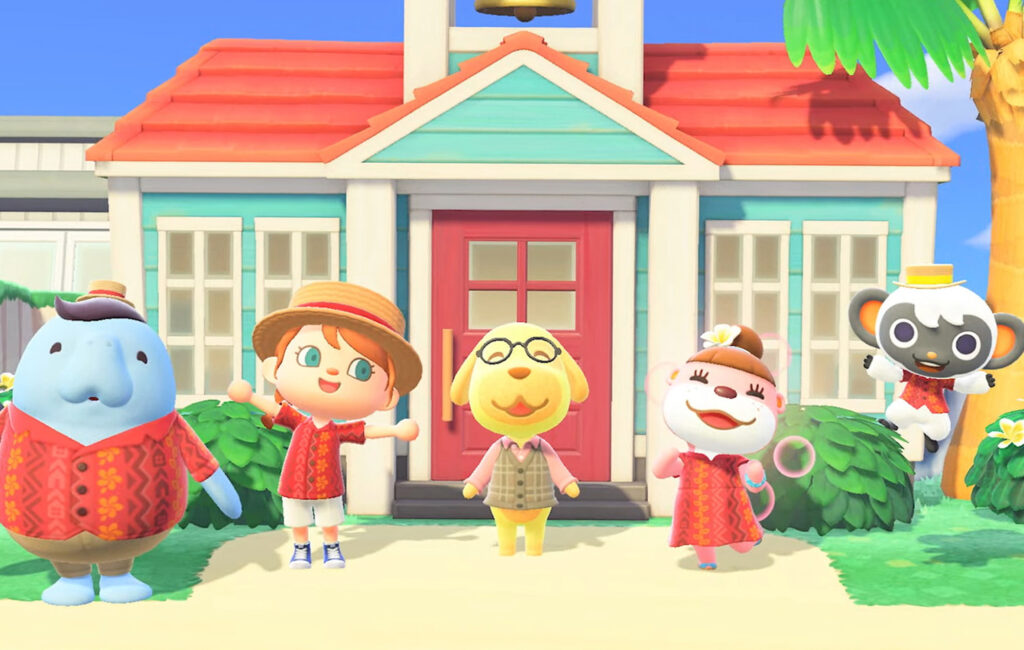
Animal Crossing: New Horizons’ Cultural Missteps in the Chinese Market
In 2020, the Chinese market accounted for over 25% of the global video game industry’s revenue, making it an essential target for game developers. However, cultural differences can be a significant obstacle to success in this market, as illustrated by the case of Animal Crossing: New Horizons.
When the game was released in China in April 2020, it received criticism for its use of certain words and phrases that were deemed inappropriate or offensive by Chinese players. For example, the phrase “Flick the wrist to swing a net” was translated into Chinese as “以手臂挥动网捕捉昆虫” (swing the arm to catch insects with a net), which sounded awkward and unnatural to Chinese players.
The issue was not with the translation itself, but with the lack of cultural understanding behind it. The phrase “Flick the wrist” is a common expression in English, but it does not translate well into Chinese. A more culturally appropriate translation would have been “挥动手中的网捕捉昆虫” (swing the net in your hand to catch insects).
To avoid similar issues, it is crucial to conduct thorough research and have a deep understanding of the cultural nuances and expectations of your target audience. Work with a localization partner who has expertise in the target market to ensure that your game is culturally appropriate and engaging.
Despite efforts to localize the game for the Chinese market, Animal Crossing: New Horizons was ultimately banned in China in April 2020 due to political reasons. This serves as a reminder that cultural sensitivity is not the only consideration when developing games for foreign markets, and that political and regulatory factors must also be taken into account.
Pokémon Go: Localizing for Cultural Sensitivity in Saudi Arabia
In 2016, when Pokémon Go was released globally, it quickly became a phenomenon. However, when the game was launched in Saudi Arabia, it was met with criticism and controversy. Some players found that the game was not compatible with the country’s cultural norms, as it required players to capture and battle creatures, which was seen as a form of animal cruelty.
To address this issue, the game’s developer, Niantic, worked with a local partner to make changes to the game’s mechanics, replacing the creatures with virtual items such as gems and jewels. This allowed the game to be more culturally appropriate for players in Saudi Arabia, and it regained its popularity in the country.
This case study illustrates the importance of having a deep understanding of cultural nuances and expectations when localizing video games. By working with a local partner, developers can identify potential cultural issues and make the necessary changes to ensure that their game is appropriate and engaging for players in different markets.
Despite efforts to make the game more culturally appropriate, Pokémon Go was ultimately banned in Saudi Arabia due to religious concerns. However, this case study still illustrates the importance of having a deep understanding of cultural nuances and expectations when localizing video games.
Poor Quality Control
Quality control is another critical aspect of video game localization. Errors such as mistranslations, grammatical mistakes, or typos can greatly impact the player’s experience, leading to negative reviews and a decline in sales.
For example, the game Assassin’s Creed II was released in 2009 with an Italian localization that contained numerous grammatical and spelling errors, leading to criticism from Italian players. Ubisoft, the developer of the game, had relied on automated translation software to localize the game, which resulted in errors such as “la grande mura” (the great walls) instead of “le grandi mura” (the great walls).
To avoid this, it is important to have a thorough quality control process in place. This includes reviewing and testing all aspects of the localized content, such as in-game text, subtitles, audio, and UI elements.
Quality control should be carried out by native speakers or professionals who are fluent in the target language and have a deep understanding of the culture and context. This ensures that the final product is accurate, natural-sounding, and free of errors, leading to a positive player experience and better sales.
What Should You Prepare Before Localization Starts?
Many of the mistakes above are baked in before a single word is translated. Translators who receive a bare spreadsheet of strings, with no idea who is speaking, where the text appears, or what tone the scene calls for, are being set up to fail. Preparing a proper handoff package solves most of this:
- String context: add comments explaining who is speaking, to whom, and in what situation. A single word like “Fire” can be a verb, a noun, or a menu label — without context, the translator can only guess.
- A glossary and style guide: lock down how character names, items, and recurring terms should be handled, and define the overall tone you want in each language.
- Screenshots and gameplay footage: seeing text in place resolves ambiguity faster than any written explanation.
- Flexible UI: text can grow considerably when translated out of English, so leave room in buttons, menus, and text boxes — or be ready to resize them.
How Can You Catch Localization Mistakes Before Players Do?
Localization quality assurance (LQA) is the stage where translated text is checked inside the actual game, not just in a document. It’s the difference between text that is technically correct and text that actually works on screen.
An effective LQA pass looks at more than spelling and grammar. Reviewers should be native speakers of the target language playing the actual build, checking that lines fit their text boxes, that variables and placeholders display correctly, that fonts render every character properly, and that the tone matches the scene. It also helps to run a terminology check against your glossary to confirm that key names stayed consistent from the first quest to the last.
If you have an engaged community in a target market, consider a small beta with local players before the full launch. They will spot awkward phrasing and cultural missteps that even professional reviewers can miss, simply because they are the exact audience the localization was made for.
In conclusion, video game localization is a complex and challenging process that requires attention to detail and expertise. By avoiding common mistakes and working with reliable and experienced localization partners, developers can ensure that their games are culturally appropriate, fully localized, and have a seamless player experience. These case studies demonstrate the importance of cultural understanding, complete localization, quality control, and avoiding regional differences in language and culture within the same target market.