

Welcome to the world of video games, where players reign supreme and game developers are always striving to improve the gaming experience. But did you know that one of the keys to winning over players worldwide is high-quality localization?
In this post, we’ll show you how true case studies prove that player-first localization strategies can make all the difference in the success of your game.
What does “high-quality localization” actually mean?
Before we dive into the case studies, let’s define our terms. High-quality localization is much more than swapping words from one language into another. It means the translated text is accurate and faithful to the original intent; the tone and personality of each character survive the journey into the new language; cultural references, jokes, and idioms are adapted so they land with the target audience instead of confusing them; and the text behaves correctly inside the game itself — it fits the UI, respects character limits, and displays without broken variables or truncated lines.
When all of those pieces come together, players in the target market experience the game the way its creators intended. When any of them fails, players notice — and as the examples below show, they talk about it.
Lost in Translation? Not Anymore!
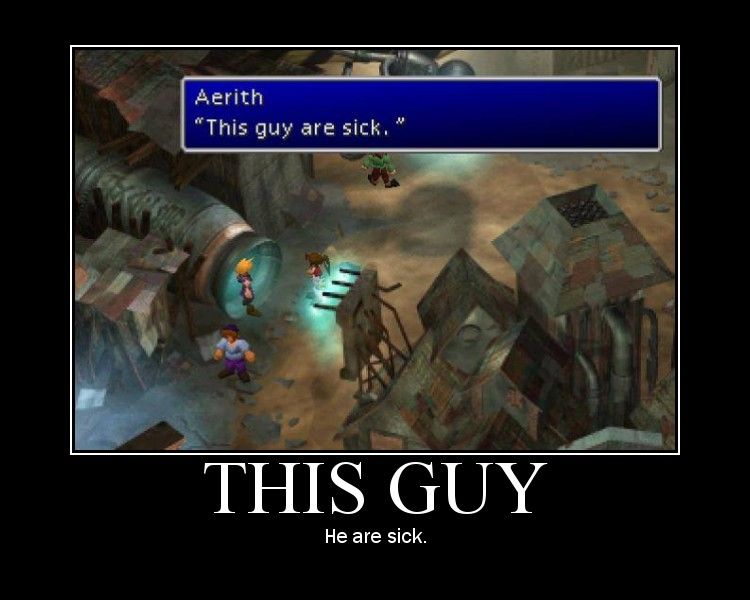
When it comes to translating video games, accuracy and attention to detail are paramount. Take, for example, the case of the classic game “Final Fantasy VII”, which originally had a mistranslation that caused confusion among players. In the original game, one character said, “This guy are sick”. The phrase, being grammatically incorrect, made no sense to English speakers.
A skilled localization team was able to fix this issue in the remake, ensuring that players could fully immerse themselves in the game’s story without being pulled out of it by a confusing translation.
Why does a single garbled line matter so much? Because games run on immersion. Every time a player stumbles over a sentence that doesn’t parse, they’re briefly reminded that they’re reading a translation rather than living a story — the fictional pact between the game and the player is broken. One awkward line is forgivable. A pattern of them erodes trust in the whole script: players start second-guessing dialogue, quest instructions, and tutorial text, and the emotional beats the writers worked so hard on simply stop landing.
The lesson for developers is straightforward: translation accuracy isn’t a nice-to-have layer applied at the end. It’s part of the writing itself, and it deserves the same care in every language you ship.
Cultural Appropriateness: The Name of the Game
In video game localization, cultural appropriateness is just as important as accuracy. For example, in the game “Fire Emblem: Fates”, the original version included a scene where the player had the option to choose a same-sex relationship. However, in the North American version, this scene was removed due to concerns over cultural sensitivity. This decision was met with controversy, as many players felt that the localization team had censored the game.
This example shows the delicate balance that localization teams must strike between accuracy and cultural sensitivity.
In practice, cultural adaptation covers far more than headline-grabbing content decisions. It includes humor and wordplay that would fall flat if translated literally, idioms and pop-culture references that don’t exist in the target culture, gestures and symbols that carry different meanings in different regions, and even things like character names that might sound unintentionally comical — or offensive — in another language.
The healthiest way to handle sensitive content is collaboration, not unilateral decisions. A good localization team flags potentially problematic material early, explains why it may be an issue in a given market, and lets the developer make an informed call. That conversation should happen during production, not after the backlash — and every decision should be documented so the reasoning survives team changes and future updates.
Quality Control is Key
In the fast-paced world of video game development, mistakes can happen. That’s why a thorough quality control process is essential to ensuring that your game is polished and error-free.
In the case of “The Legend of Zelda: Breath of the Wild”, a mistranslation led to confusion among players regarding a key plot point. However, the game’s developers quickly corrected the issue with a patch, showing the importance of quality control in video game localization.
So what does real quality control look like? At minimum, it means the translated text passes through more than one pair of eyes: a translator produces the text, an editor reviews it against the source for accuracy and consistency, and a proofreader gives it a final polish. But text review alone isn’t enough. The strongest safety net is linguistic quality assurance (LQA) — playing the actual localized build to check how the text behaves in context: do lines fit their text boxes, do variables and placeholders resolve correctly, are subtitles readable at the pace of the scene, does a string that looked fine in a spreadsheet make sense on screen?
Patches can fix mistakes after launch, but they should be the exception, not the plan. By launch day, players have already formed their first impression — and reviews written in week one don’t update themselves.
The Right Partner for the Job
Choosing the right localization partner is crucial to the success of your game. When working with a partner, look for experience in video game localization, a track record of success, and a commitment to quality.
For example, Square Enix’s localization team has a reputation for producing high-quality translations that accurately convey the story and emotion of their games. By partnering with a skilled localization team, you can ensure that your game is player-first and ready to win over audiences worldwide.
When you evaluate candidates, go beyond the portfolio page. Ask whether their linguists are native speakers of the target language who actually play games, how their review process works, and how they handle questions about your script — a team that sends you thoughtful queries about ambiguous lines is a team that cares about getting them right.
How can developers set localization up for success?
Quality isn’t only the localization team’s job — the way you prepare your game has a huge influence on the result. Here’s what you can do on your side:
- Plan for localization early. Keep text out of your code and in editable resource files, and avoid stitching sentences together from fragments — grammar works differently across languages, and concatenated strings rarely survive translation intact.
- Provide context. A localization kit with a glossary, character descriptions, tone notes, and screenshots lets translators make informed choices instead of guessing who is speaking and why.
- Leave room for text to grow. Translations are often longer than the English source — German and French are classic examples — so UI elements need breathing space or graceful ways to handle longer strings.
- Keep terminology consistent. Agree on how key items, abilities, and locations are named, and enforce it with a shared glossary across every quest, menu, and store page.
- Budget time for LQA. Schedule a proper in-build review before launch instead of treating the translated files as the finish line.
- Answer questions quickly. Treat your localizers as part of the development team — the faster their queries get answered, the fewer wrong guesses end up in the final build.
Conclusion
In conclusion, video game localization is a vital aspect of the game development process. By putting the player first and working with a skilled localization partner, you can ensure that your game is accurately translated, culturally appropriate, and error-free.
With real-life case studies proving the importance of localization, it’s time to take your game to the next level and win over players around the world. Start planning early, give your localization team the context they need, insist on a real quality control process — and your game will speak to every player as if it had been written for them in the first place.